Europe wildfires: 2 dead, 500 evacuated as twin blazes hit Greek island near Athens
Scientific modeling, weather telemetry, and ecological protection policies converge around the latest updates on Europe wildfires: 2 dead, 500 evacuated as twin blazes hit Greek island near Athens.
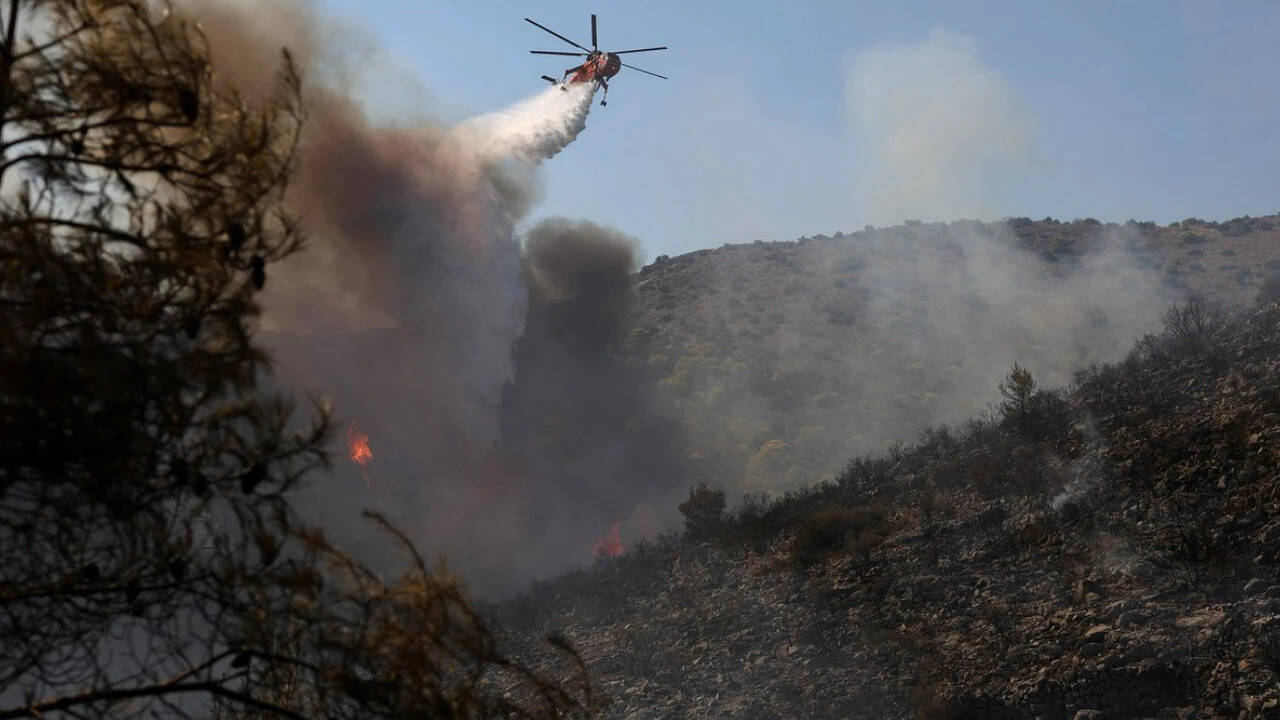
Table of Contents ▼
- 1. The Ecological Ground Reality: Breaking Field Dispatch on Europe wildfires: 2 dead, 500 evacuated as twin blazes hit Greek island near Athens
- 2. Meteorological Telemetry, Climate Modeling & Empirical Findings
- 3. Environmental Clearance Protocols & The Implementation Gap
- 4. Biodiversity Protection, Wildlife Corridors & Community Resilience
- 5. The Renewable Transition Roadmap & 2030 Climate Commitments
- Frequently Asked Questions
- Official Reference & Verification
According to primary dispatches and reporting from govindianews.com (7 September 2026), Scientific modeling, weather telemetry, and ecological protection policies converge around the latest updates on Europe wildfires: 2 dead, 500 evacuated as twin blazes hit Greek island near Athens. Ecological field observations, meteorological telemetry, and statutory conservation records highlight the urgent dimensions of "Europe wildfires: 2 dead, 500 evacuated as twin blazes hit Greek island near Athens". As climate volatility tests ecological resilience, empirical data and ground-level conservation practices guide sustainable policy. Environmental scientists and forest conservation authorities are examining satellite telemetry and field surveys surrounding this development. Balancing human development with biodiversity protection and carbon sink preservation remains the central challenge of modern ecological governance. From river basin hydrology to renewable grid integration, "Europe wildfires: 2 dead, 500 evacuated as twin blazes hit Greek island near Athens" underscores the interconnected nature of environmental systems. Our Ecological Sciences Desk provides verified dispatches and scientific context.
1. The Ecological Ground Reality: Breaking Field Dispatch on Europe wildfires: 2 dead, 500 evacuated as twin blazes hit Greek island near Athens
Primary reporting published by govindianews.com (7 September 2026) indicates that Scientific modeling, weather telemetry, and ecological protection policies converge around the latest updates on Europe wildfires: 2 dead, 500 evacuated as twin blazes hit Greek island near Athens. Frontline authorities and sector stakeholders are actively coordinating to institute operational directives in response.
In an era defined by climatic shifts and ecological stress, Europe wildfires: 2 dead, 500 evacuated as twin blazes hit Greek island near Athens brings urgent scientific attention to the health of our biosphere. From frontline communities to meteorological observatories, verified environmental data underscores the need for empirical conservation policy.
Field reports and satellite remote-sensing disclosures reveal significant ecological dynamics on the ground. Environmental researchers note that preserving fragile ecological equilibrium requires balancing immediate human developmental needs with the non-negotiable carrying capacities of natural habitats.
Forest authorities and local conservation councils have initiated emergency baseline surveys, establishing systematic field monitoring to prevent habitat degradation and protect endemic species.
2. Meteorological Telemetry, Climate Modeling & Empirical Findings
Scientific telemetry recorded by the India Meteorological Department (IMD) and international climate monitoring constellations provides empirical precision to this analysis. High-resolution atmospheric sensors and hydrological gauges document microclimate variations that directly influence agricultural productivity and water table recharge rates.
Climatologists emphasize that localized weather extremes are becoming more frequent, necessitating predictive risk modeling rather than retrospective disaster response. Automated sensor networks now deliver real-time data to state disaster management authorities, supporting rapid emergency response.
Academic research institutions continue to stress-test predictive models against empirical climate observations, refining early-warning accuracy for vulnerable coastal and riverine communities.
3. Environmental Clearance Protocols & The Implementation Gap
Statutory oversight overseen by the Ministry of Environment, Forest and Climate Change (MoEFCC) establishes rigorous environmental impact assessment (EIA) mandates. Developers and industrial operators are legally obligated to execute compensatory afforestation and maintain zero-liquid-discharge standards.
However, environmental legal advocates emphasize that statutory guidelines are only as effective as ground enforcement. Bridging the implementation gap requires continuous public disclosure of environmental compliance audits and independent third-party monitoring of air and water effluent discharges.
Regulatory pollution control boards are increasingly leveraging drone surveillance and automated continuous emission monitoring systems (CEMS) to ensure 24/7 compliance across industrial clusters.
4. Biodiversity Protection, Wildlife Corridors & Community Resilience
Intact ecosystems are humanity's greatest natural buffer against climate vulnerability. Protecting designated wildlife corridors and wetland carbon sinks safeguards biodiversity while preserving crucial ecosystem services, including pollination, groundwater purification, and soil stability.
Indigenous and local forest-dwelling communities play a pivotal role as frontline conservation stewards. Community forest rights frameworks empower local panchayats to sustainably manage ecological resources, proving that community-led conservation achieves superior ecological outcomes compared to top-down administrative models.
Reforestation initiatives are prioritizing native, climate-resilient tree species over monoculture plantations, ensuring sustainable ecological succession and robust soil retention.
5. The Renewable Transition Roadmap & 2030 Climate Commitments
Looking ahead toward India's ambitious 2030 climate goals—including 500 GW of non-fossil energy capacity and a 45% reduction in carbon intensity—Europe wildfires: 2 dead, 500 evacuated as twin blazes hit Greek island near Athens highlights the practical challenges and opportunities of the clean energy transition.
Grid integration of utility-scale solar and wind parks, paired with battery energy storage systems (BESS), is transforming the national power landscape. Decarbonizing heavy industrial sectors through green hydrogen and circular economy models remains a paramount national priority.
GovIndiaNews Environment Desk will continue reporting directly from frontline conservation zones and scientific research centers to document India's ecological transformation.
Frequently Asked Questions (FAQ)
What is the core environmental significance of Europe wildfires: 2 dead, 500 evacuated as twin blazes hit Greek island near Athens?
According to dispatches from govindianews.com, Scientific modeling, weather telemetry, and ecological protection policies converge around the latest updates on Europe wildfires: 2 dead, 500 evacuated as twin blazes hit Greek island near Athens. Follow-up actions and compliance protocols are being instituted across concerned administrative bodies.
What scientific data and telemetry back these environmental findings?
Data is gathered through satellite remote sensing, IMD meteorological ground telemetry, and empirical ecological surveys conducted by recognized environmental research bodies.
Where can citizens access verified environmental data and air/water quality reports?
Official environmental notifications, real-time air quality indices (AQI), and weather advisories are published on MoEFCC (moef.gov.in) and IMD (mausam.imd.gov.in).
Official Verification & Authority Portals
GovIndiaNews verifies all news reports against primary gazettes, authorized communiqués, and ministry portals. Verify official updates through the following resources: