Nitin Gadkari Signals Aggressive Regulatory Pivot Against Underperforming Infrastructure Contractors
Union Minister Nitin Gadkari announces a strict stance on blacklisting contractors and suspending officials to address delays in critical infrastructure...
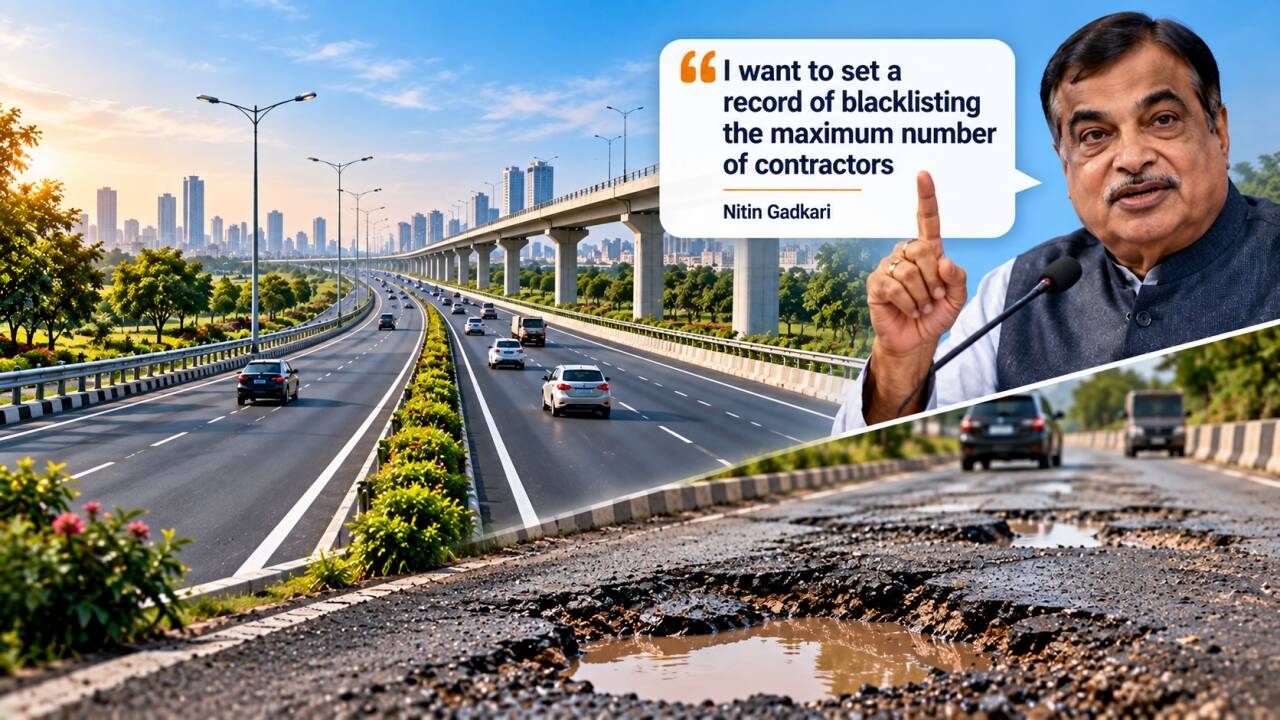
Table of Contents ▼
Union Minister Nitin Gadkari has signaled a significant shift in the oversight of national infrastructure projects, declaring an intent to set a record for blacklisting contractors and suspending officials found responsible for poor-quality work and project delays. The statement, delivered on Wednesday, underscores a tightening of administrative accountability within the Ministry of Road Transport and Highways. The minister’s remarks follow a period of scrutiny regarding project timelines and execution standards, specifically highlighting the delays associated with the Mumbai-Goa highway. By emphasizing the need for punitive measures against non-performing entities, the government is signaling a move toward stricter enforcement of contractual obligations to ensure that capital expenditure translates into tangible public assets without excessive gestation periods.
Financial Markets & Capital Allocation Alert
The move to blacklist underperforming contractors represents a critical shift in the risk-reward calculus for infrastructure firms operating within the government's project pipeline. For institutional investors and stakeholders, the enforcement of stringent quality standards is a double-edged sword: while it may lead to short-term volatility in project delivery schedules, it is designed to protect the long-term integrity of capital allocation.
Infrastructure projects are capital-intensive, and delays often lead to cost overruns that erode EBITDA margins and strain corporate balance sheets. By removing contractors who fail to meet technical and temporal benchmarks, the ministry aims to mitigate the systemic risk of stalled assets, which can otherwise lead to liquidity crunches and impaired credit profiles for the firms involved.
Addressing Execution Risk and Accountability
The focus on the Mumbai-Goa highway serves as a case study for the broader challenges facing the sector. The minister’s admission of feeling 'ashamed' regarding the delays highlights the reputational and operational costs associated with project mismanagement. In the context of national development, where infrastructure acts as a force multiplier for GDP growth, the government is prioritizing the removal of bottlenecks caused by inefficient project management.
The proposed strategy involves a two-pronged approach: the blacklisting of firms that fail to adhere to quality and timeline mandates, and the suspension of government officials who fail to provide the necessary oversight. This mechanism is intended to enforce a higher degree of regulatory compliance and project discipline across the entire value chain.
Strategic Implications for the Infrastructure Sector
The push for accountability is likely to influence future bidding processes and contract awards. Firms with robust balance sheets, strong execution track records, and transparent operational histories are expected to be favored, while those with a history of delays face the risk of being excluded from future tenders. This shift aligns with broader efforts to improve the quality of public-private partnerships and ensure that sovereign spending yields the intended economic returns.
As the ministry moves to formalize these measures, stakeholders should anticipate a more rigorous audit culture. The emphasis on 'setting a record' for blacklisting suggests that the government is prepared to accept the friction of contract terminations in exchange for higher standards of infrastructure delivery.
Frequently Asked Questions (FAQ)
What is the primary objective of the minister's recent announcement?
The primary objective is to improve the quality and timeliness of infrastructure projects by holding contractors and officials accountable through blacklisting and suspensions.
Why is the government focusing on blacklisting contractors?
The government is targeting poor-quality execution and project delays, which negatively impact the efficiency of public infrastructure spending and overall economic development.
Official Verification & Authority Portals
GovIndiaNews verifies all news reports against primary gazettes, authorized communiqués, and ministry portals. Verify official updates through the following resources: